The Great Texas Convergence: How Migration Is Reshaping DFW’s Housing Market
By Mark Allen CCIM
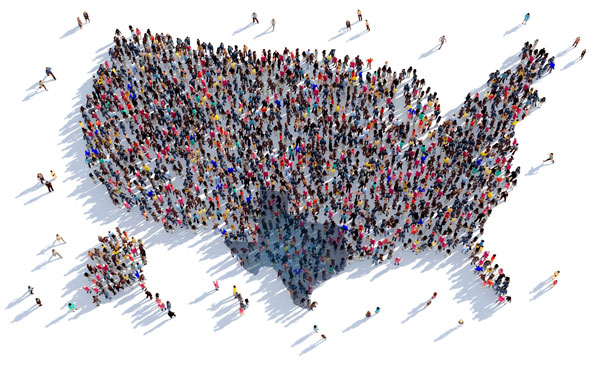
Every single day, approximately 339 people choose the Dallas-Fort Worth Metroplex as their new home. At the same time, corporate boardrooms from California to New York are signing relocation papers and pointing their operations south. Together, these two forces are fundamentally reshaping DFW’s housing landscape — and the effects are being felt across every price point and product type.
A Region on the Rise
DFW is now the fourth-largest metro in the United States, with a population exceeding 8.47 million. Since 2020, the region has grown by roughly 11 percent — faster than any other top-five metro — and Fort Worth recently crossed the one-million-resident milestone, becoming the 12th-largest city in the country. Between July 2023 and July 2024 alone, the Metroplex added 180,000 new residents, driven by domestic arrivals from Oklahoma City, Austin, Houston, and Los Angeles, as well as strong international migration that accounted for 58 percent of total population growth.
The draw is well established: no state income tax, a cost of living still well below coastal alternatives, and an employment base that now ranks third-largest in the nation.
Corporations Are Following the Talent
Population growth and corporate migration are self-reinforcing. According to a 2025 CBRE analysis, DFW ranked No. 1 in the United States for corporate headquarters relocations from 2018 to 2024, attracting 100 new corporate HQs — more than Austin (81), Nashville (35), or Houston (31). In 2024 alone, 96 companies nationally announced headquarters moves, with Texas capturing the largest share. California lost 17 corporate headquarters that year; 12 of them landed in Texas.
The names are notable: Charles Schwab, McKesson, AECOM, Caterpillar, Goldman Sachs, KFC, Care.com, and CBRE itself have all planted flags in North Texas. Most have gravitated toward suburban innovation corridors in Plano, Frisco, Allen, and Las Colinas — mixed-use hubs that offer modern office space and the lifestyle amenities that attract and retain employees. And those employees need housing.
Single-Family: Steady Demand, Moderating Prices
The sustained influx of residents has kept single-family demand strong, even as appreciation has cooled from pandemic peaks. Median home prices across DFW rose approximately 4 percent in 2025 — down from an 11 percent surge in 2023 — while single-family construction permits climbed 20 percent year-over-year in 2024. Frisco, McKinney, and Southlake command median prices above $600,000, while Fort Worth, Arlington, and Mesquite offer more affordable options in the $280,000–$350,000 range. Mortgage rates near 6.75 percent have created a bifurcated market: well-compensated corporate relocatees can absorb elevated costs, while middle-income buyers are increasingly pushed to outer suburbs in Kaufman, Ellis, and Johnson counties — the Metroplex’s next frontier of horizontal growth.
Multifamily: A Correction, Then Recovery
The apartment market tells a more dynamic story. Developers flooded DFW with new supply between 2021 and 2024, delivering over 38,000 units in a single 12-month period. The result was a temporary correction: average rents slid roughly 1.6 percent year-over-year to around $1,515 by mid-2024, and vacancy climbed toward 11 percent in some submarkets. But the demand fundamentals held. DFW ranked second only to New York City in multifamily absorption, filling more than 30,000 units in a single year — well above the pre-pandemic average of 20,000. As the delivery pipeline thinned significantly in 2025, the market began to stabilize. One-bedroom rents settled around $1,410 in Dallas and $1,250 in Fort Worth, with rent growth projected to return to approximately 1.5 percent by year-end. Institutional investors have taken note: DFW remains among the top three multifamily investment markets in the country.
The Road Ahead
The structural drivers of DFW’s growth — tax climate, affordability relative to coastal markets, job creation, and geographic centrality — are durable. Population projections point toward 12 million residents by 2050, and corporate relocation momentum continues to build, with DFW logging its 100th headquarters relocation since 2018 earlier this year.
Affordability will be the defining challenge. As housing costs rise alongside demand, the region’s edge over coastal metros narrows — slowly, but measurably. The communities best positioned for the next wave of growth will be those that manage zoning, infrastructure, and school quality in step with the people and companies still choosing North Texas every day.
Packing your bags?
Let’s Connect!